

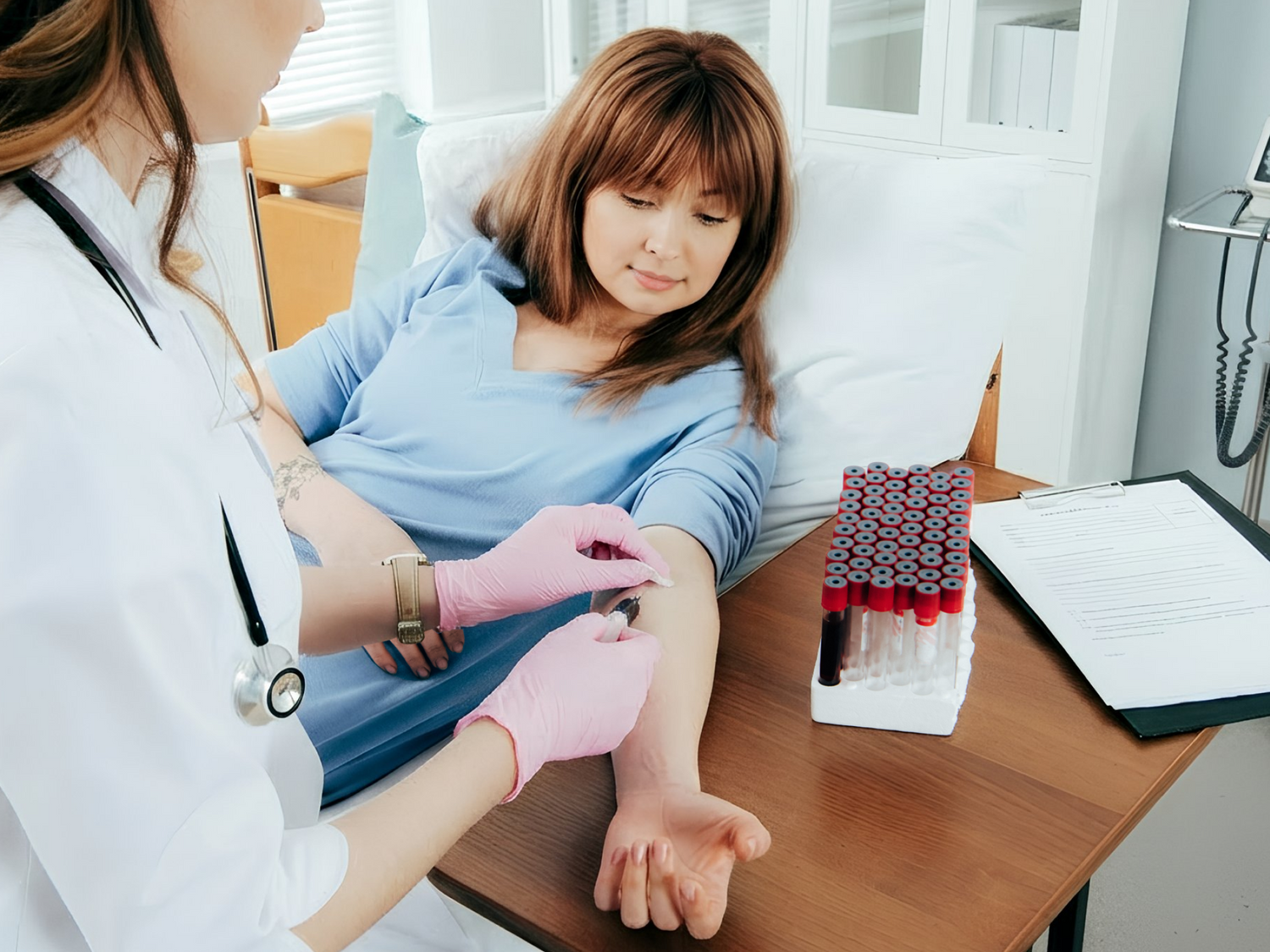
You schedule your annual physical, get your bloodwork done, and hear the reassuring words: "Everything looks normal." But what if "normal" doesn't mean "complete"? For many women, standard annual bloodwork checks just enough to rule out obvious problems — while quietly missing the early signs of conditions that affect energy, mood, and long-term health.
What Does an Annual Physical Actually Check?
A standard annual physical typically includes vital signs (blood pressure, heart rate, weight), a basic metabolic panel, and a complete blood count (CBC). Depending on your age and provider, you might also get cholesterol screening, a thyroid check via TSH, and blood glucose levels. These are valuable — they catch major red flags like high cholesterol, diabetes, and thyroid dysfunction.
But here's what many women don't realize: the specific tests included vary significantly by provider, insurance plan, and whether you ask for them [1]. A CBC, for example, measures your hemoglobin — which tells your doctor whether you're anemic right now. What it doesn't measure is how much iron your body has in reserve. And that distinction matters more than most people think.
What Does Standard Bloodwork Miss?
The most significant gap in standard bloodwork for women is ferritin — the protein that reflects your body's iron stores. Most routine panels don't include it unless you specifically ask or your hemoglobin already flags as low.
This means you can be iron-deficient without being anemic. Your hemoglobin can look perfectly normal while your iron reserves are steadily depleting. By the time hemoglobin drops low enough to trigger a flag on your CBC, you may have been iron deficient for months or even years — experiencing fatigue, brain fog, hair thinning, and poor concentration the entire time without a clear explanation [2].
Ferritin isn't the only marker that standard panels often skip. Vitamin D deficiency is widespread among women, especially those in northern climates or with darker skin tones. Vitamin B12 can be low in women on plant-based diets or certain medications. And a basic TSH test for thyroid function doesn't always catch autoimmune thyroid conditions — a full panel including T3, T4, and thyroid antibodies provides a more complete picture.
The common thread is that standard bloodwork is designed to catch problems after they've developed, not to identify trends before they become clinical. For women, whose blood health shifts regularly with hormonal cycles and life stages, this reactive approach leaves real gaps.
Why Does This Matter More for Women?
Iron deficiency is the most common nutritional deficiency worldwide, and it disproportionately affects women of reproductive age [3]. The reasons are biological and cumulative.
Monthly menstruation depletes iron with every cycle. Women with heavy periods lose significantly more iron, and perimenopause often brings heavier, more irregular bleeding that accelerates iron depletion before women even realize it's happening.
Pregnancy and postpartum recovery dramatically increase iron demands. The body needs substantially more iron during pregnancy to support increased blood volume and fetal development, yet many women enter pregnancy already iron-depleted without realizing it.
Dietary patterns also play a role. Vegetarian and vegan diets — which are more common among women — provide non-heme iron that the body absorbs less efficiently than heme iron from animal sources.
These aren't edge cases. They're the everyday reality for a large portion of women. Yet the standard annual physical wasn't designed around these rhythms. It was designed as a once-a-year checkpoint, the same for everyone, which means it systematically underserves the people whose blood health fluctuates the most.
What Blood Tests Should Women Ask For?
The next time you schedule bloodwork, consider asking your healthcare provider about adding these tests to your standard panel:
- Ferritin measures iron stores, not just current hemoglobin. Essential for detecting iron deficiency before it progresses to anemia. Especially important if you experience fatigue, heavy periods, or brain fog with "normal" CBC results.
- Vitamin D (25-hydroxyvitamin D) is widely deficient in women, particularly during the winter months. Affects bone health, immune function, and mood.
- Vitamin B12 is critical for nerve function and red blood cell production. Important if you follow a plant-based diet or take medications such as metformin or proton pump inhibitors.
- Full thyroid panel (TSH, free T3, free T4, thyroid antibodies) goes beyond the basic TSH screen to identify autoimmune thyroid conditions that affect energy, weight, and mood.
- Iron panel (serum iron, TIBC, transferrin saturation) provides a comprehensive view of iron metabolism if you're symptomatic or your ferritin is borderline.
Not every woman needs every test every year. But knowing what's available and what isn't included by default puts you in a stronger position to have an informed conversation with your healthcare provider about what makes sense for your health profile.
How to Monitor Your Blood Health Between Visits
Even comprehensive bloodwork is still just a snapshot — a single data point from one day of the year. Your blood health doesn't hold still between appointments. It shifts with your menstrual cycle, stress levels, diet, hydration, and life stage. Ongoing awareness fills the gap that annual testing can't.
The Ruby app helps you track these changes between doctor visits. Using patented fingernail selfie technology, Ruby estimates your Iron Score (your likelihood of iron deficiency) and Circulation Score (how well blood flows through your fingertips). Ruby also tracks hydration, mood, supplements, and menstrual cycles — giving you a continuous view of your blood health rather than waiting for next year's lab results to tell you something has changed.
Download Ruby today and start building a more complete picture of your blood health. [Click here to download via iOS or Android app stores.]
References
[1] Yale Medicine. "Are You Iron Deficient? 8 Things Women Should Know." https://www.yalemedicine.org/news/are-you-iron-deficient-what-women-need-to-know
[2] Al-Naseem A, et al. "Iron deficiency without anaemia: a diagnosis that matters." Clinical Medicine. 2021;21(2):107-113. https://pmc.ncbi.nlm.nih.gov/articles/PMC8002799/
[3] Yale School of Medicine. "Why Screen for Iron Deficiency? It's Common, Consequential & Curable." https://medicine.yale.edu/news-article/why-screen-for-iron-deficiency-its-common-consequential-and-curable/


Leave a comment
This site is protected by hCaptcha and the hCaptcha Privacy Policy and Terms of Service apply.