

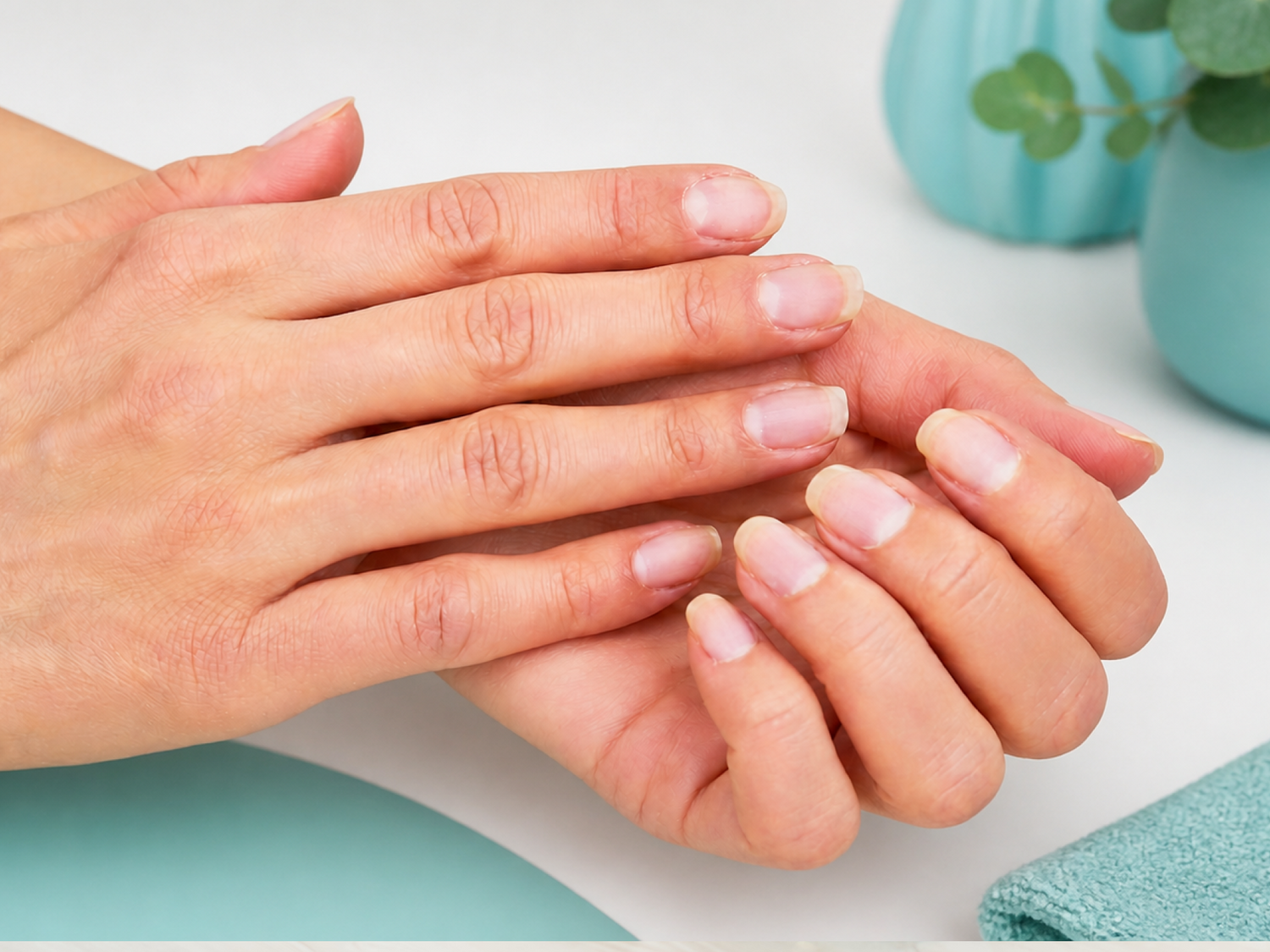
Scroll through your feed lately and you might notice something missing: the bold gels, the intricate nail art, the fresh-every-two-weeks manicures. In their place is something quieter — clean, buffed, polish-free nails that look like, well, nails. Bare is having a moment. And for a lot of women, it isn't a phase. It's a permanent break-up with the polish bottle.
The "bare nail" look has become one of the defining beauty shifts of 2026, folded into the same quiet-luxury, low-maintenance mood that gave us slicked-back hair and skin-first makeup. But underneath the aesthetic is something more interesting than a trend cycle. Women aren't just choosing bare nails because they look effortless. They're choosing them because they feel better — for their time, their wallets, and their actual nail health.
Here's why the movement is catching on, and why your nails might be happier without the polish.
Is Going without Nail polish Better for Your Nails?
Going without nail polish can give your nails a break from the repeated chemical exposure, dehydration, and removal-related damage associated with frequent gel or acrylic manicures. While nails don't need to "breathe," spending time polish-free also makes it easier to notice changes in nail color, texture, or shape that may offer clues about your overall health.
Trend fatigue is real
Somewhere between the third gel fill and the second lunch-break touch-up, a lot of people quietly asked themselves: is this worth it? Keeping a flawless manicure is a genuine commitment — the appointments, the chipping, the cost that adds up fast over a year. The bare nail trend is, in part, a collective exhale. It's permission to stop maintaining one more thing.
There's also a bigger cultural shift underneath it. The polished-to-perfection era is giving way to a more natural, pared-back idea of beauty — one that celebrates skin, hair, and nails looking like themselves. Bare nails fit that mood perfectly: understated, clean, and quietly confident. No upkeep required.
The health wake-up call
The other reason women are going bare is simpler: they got tired of the damage.
If you've ever peeled off a gel manicure and found your nails underneath thin, ridged, and flaking, you already know. Dermatologists have long flagged that frequent gel and acrylic manicures can leave nails dry, brittle, and weakened — and that the removal process (all that scraping and soaking) is often harder on your nails than the polish itself. According to Cleveland Clinic, cracking and peeling are the most common complaints, and a damaged nail can take months to fully grow out.
Then there's the UV question. The lamps used to cure gel polish emit UVA light, and while the overall risk is still being studied, experts including those at MD Anderson recommend caution — from applying sunscreen to your hands to using UV-protective gloves. For many women, "I'd rather not" has become the easiest answer.
Going bare gives your nails a chance to do what they can't do under a constant layer of gel: recover. No, nails don't literally "breathe" — they're made of keratin, not living tissue — but they absolutely benefit from a break. Time without polish means less chemical exposure, less dehydration, less trauma from removal, and room for healthy new growth to come in strong.
The hidden bonus: you can finally see your nails
This is the part most trend pieces miss, and it's the one we find most compelling.
Your nails are one of the few windows into your overall health that you can actually see without any special equipment. Their color, texture, and shape can offer small, everyday clues about what's happening inside your body — and you can only notice those clues when your nails are bare.
Pale nail beds, for instance, can sometimes hint at low iron or blood health worth paying attention to. Spoon-shaped nails that curve inward, deep horizontal grooves, or a sudden change in color are the kinds of signals that are easy to spot on a clean nail and completely hidden under an opaque coat of polish. Most of the time, these little quirks are harmless — vertical ridges, for example, are a normal part of aging. But if something changes suddenly or shows up alongside other symptoms like lasting fatigue, it's the sort of thing worth mentioning to your doctor.
Bare nails put that information back in your hands. When you can see your nails, you can notice your normal — and notice when something shifts.
Healthy nails start from the inside
Here's the beautiful irony of the bare nail trend: the less you cover your nails, the more their real health shows. Which means the secret to nails that look great without polish isn't a product. It's what's happening beneath the surface.
Strong, resilient nails are built from the inside out. A few things that genuinely help:
- Protein and iron. Nails are made of keratin, a protein, and they rely on healthy blood flow and oxygen to grow well. Iron-rich foods — beans, lentils, lean meats, leafy greens — support both, especially when paired with a little vitamin C to boost absorption.
- Hydration, inside and out. Drinking enough water helps, and so does a swipe of cuticle oil or hand cream to keep the nail plate from drying out and cracking.
- Gentle habits. Filing in one direction, not using your nails as tools, and giving them regular polish-free stretches all add up.
- Patience. Nails grow slowly — roughly a few millimeters a month. If yours are recovering from years of gel, give them a season to bounce back.
A little buffing for shine, a swipe of cuticle oil, and healthy habits from within, and bare nails can look every bit as intentional as a fresh manicure — because they are.
Bare, but make it healthy
The bare nail movement is easy to write off as just another aesthetic swing. But at its heart, it's something more grounded: women choosing ease over upkeep, health over habit, and a look that reflects what's actually going on underneath rather than covering it up.
Your nails aren't just a canvas. They're a small, honest read on your health — and going bare lets you actually read them. So if you're tempted to skip the next appointment and let your nails just be nails for a while, consider it a wellness move as much as a style one.
Sometimes the healthiest, most modern thing you can do is nothing at all.
This article is for general wellness education and isn't medical advice. If you notice a sudden or lasting change in your nails — especially alongside symptoms like fatigue — check in with a healthcare provider.
Common FAQs
- What can your fingernails tell you about your health?
Changes in fingernail color, shape, texture, or strength can sometimes provide clues about what's happening elsewhere in the body. Pale nail beds, unusual changes in color, deep horizontal grooves, or spoon-shaped nails may be worth discussing with a healthcare provider—especially when they appear suddenly or alongside symptoms such as persistent fatigue.
Nail changes alone cannot diagnose a health condition, and many changes are harmless. - Can pale fingernails be a sign of iron deficiency?
Pale nail beds can sometimes occur with iron deficiency or anemia, but nail color alone cannot tell you whether your iron levels are low. If pale nails appear alongside fatigue, weakness, dizziness, shortness of breath, or other symptoms, talk with a healthcare provider about whether further evaluation is appropriate. - What do spoon-shaped nails mean?
Spoon-shaped nails, also known as koilonychia, curve inward rather than outward. They can sometimes be associated with iron deficiency anemia, although there are other possible causes. Persistent or newly developed spoon-shaped nails should be discussed with a healthcare provider. - Are vertical ridges in fingernails normal?
Often, yes. Vertical nail ridges can become more noticeable with age and aren't necessarily a sign of a health problem. Sudden changes in nail texture, deep horizontal grooves, or changes accompanied by other symptoms are more important to discuss with a healthcare provider. - Are gel manicures bad for your nails?
Frequent gel manicures can contribute to dry, brittle, peeling, or weakened nails, particularly when removal involves repeated soaking, scraping, or peeling. Taking breaks between manicures and using gentle removal techniques can help reduce unnecessary nail damage. - Do fingernails need to “breathe” between manicures?
No. Fingernails don't breathe because the visible nail plate is made primarily of keratin rather than living tissue. However, taking a break from polish, gels, or acrylics can reduce repeated chemical exposure, dehydration, and trauma associated with manicure removal. - How long does it take damaged fingernails to grow back?
Fingernails grow slowly, so visible damage doesn't disappear immediately when you stop using gel or acrylic products. It may take several months for damaged areas to fully grow out and be replaced by new nail growth. - What nutrients support healthy fingernails?
A balanced diet that provides adequate protein, iron, and other essential nutrients supports normal nail growth. Iron is particularly important for hemoglobin production and oxygen transport, while protein provides amino acids needed to produce keratin, the primary structural protein in nails. - When should I be concerned about changes in my fingernails?
Consider speaking with a healthcare provider if you notice a sudden or persistent change in nail color, shape, thickness, or texture—particularly if it affects multiple nails or occurs alongside symptoms such as persistent fatigue, weakness, pain, or shortness of breath.
Your nails can provide useful clues, but they shouldn't be used to self-diagnose a medical condition.
References
- Cleveland Clinic — You Guessed Right: Gel Nail Polish Is Bad for Your Nails
- MD Anderson Cancer Center — Is your gel manicure safe? UV nail lamps and skin cancer risk
- Marie Claire — The Bare Nail Trend Is Taking Over


Leave a comment
This site is protected by hCaptcha and the hCaptcha Privacy Policy and Terms of Service apply.