
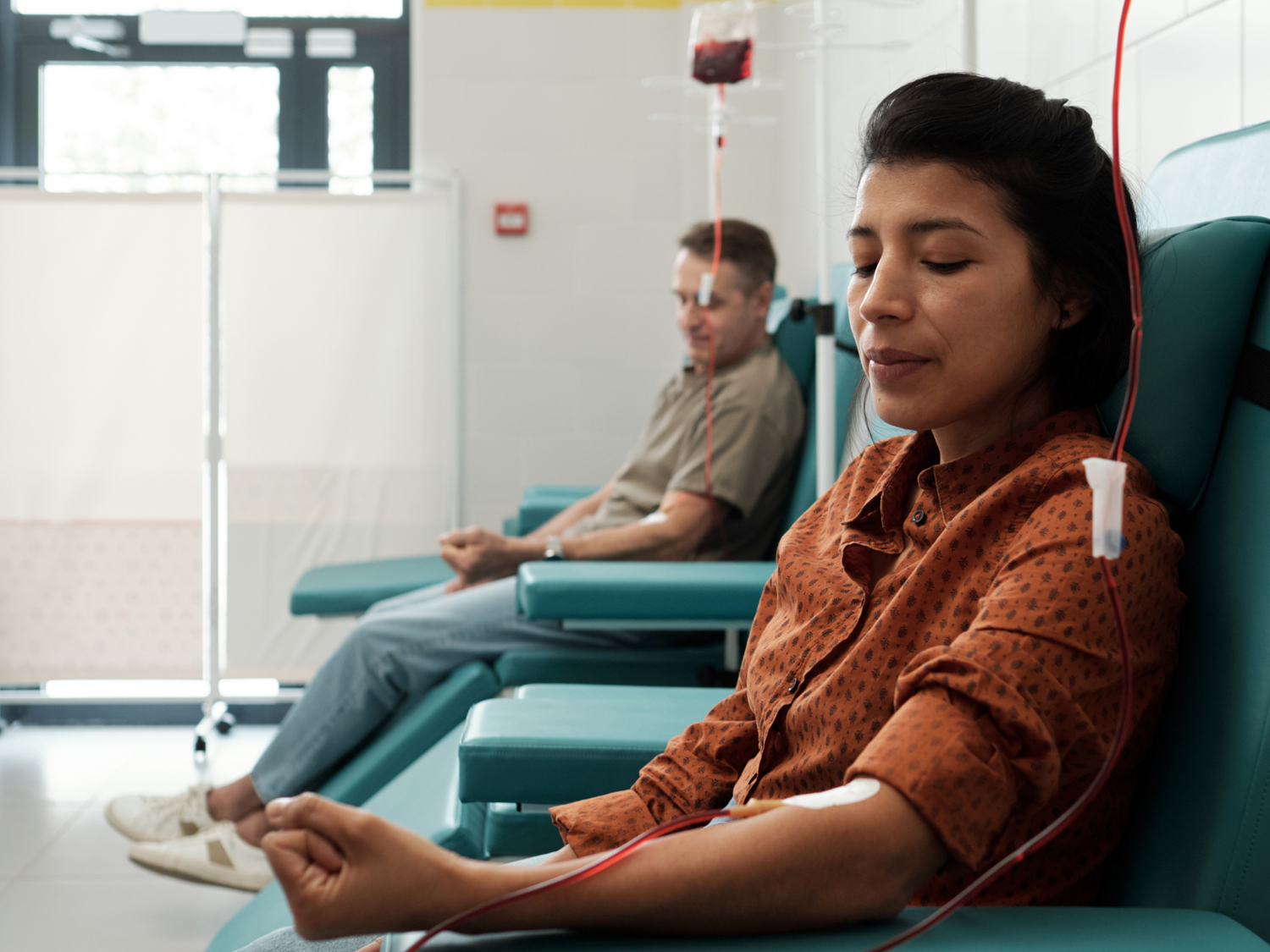
If you've ever donated blood, you know your ABO type. Maybe you're an O-negative universal donor; maybe you're a B-positive who learned it from the little card. But that letter and sign are just the beginning of what makes blood compatible.
August is National Minority Donor Awareness Month, and it exists because of a fact most people never hear: for thousands of patients, the safest blood transfusion is one from a donor whose ancestry resembles their own. Here's why — and why your iron levels are part of the story.
Why Does Blood Compatibility Go Deeper Than A, B, and O?
Red blood cells carry hundreds of surface antigens beyond the famous ones. For a single transfusion, matching the basics is usually enough. But for patients who receive blood again and again, the immune system starts noticing the smaller mismatches — and can build antibodies against them, a process called alloimmunization. Once that happens, finding compatible blood gets much harder.
Because antigen patterns are inherited, the closest matches tend to come from donors of similar ancestry. One example: the Ro subtype, especially valuable for treating sickle cell disease, is found far more often in donors of Black African and Caribbean descent — yet these donors remain underrepresented in donation pools.
Why Do Sickle Cell Patients Depend on Closely Matched Blood?
Sickle cell disease affects roughly 100,000 people in the United States, the majority of them Black or African American. Many patients rely on regular transfusions — some monthly — to prevent strokes and manage complications. That repetition is exactly the scenario where small antigen mismatches become big problems.
This is the heart of Minority Donor Awareness Month: a sickle cell patient's best match is very often a donor from their own community. When diverse donors give, hard-to-match patients get safer transfusions and fewer complications. Next month is Sickle Cell Awareness Month, and we'll go deeper on the disease itself.
How Much Iron Does Donating Blood Cost You?
Every whole-blood donation removes roughly 200–250 milligrams of iron along with the pint. Your body replaces the fluid within days and the red cells within weeks — but rebuilding the iron can take months, especially for menstruating women and frequent donors.
This is why donation centers check your hemoglobin before you give (in the US, at least 12.5 g/dL for women and 13.0 g/dL for men), and why some regular donors are deferred — turned away for a low reading. A deferral isn't a judgment; it's a signal worth following up on.
How to Show Up Iron-Ready
- Eat iron-forward in the weeks before donating: red meat, poultry, beans, lentils, and fortified cereals — paired with vitamin C for absorption.
- Space your donations: in the US you can give whole blood every 56 days, but eligibility isn't the same as full iron recovery. Frequent donors should watch trends.
- Ask about ferritin if you donate often — the hemoglobin fingerstick at the drive doesn't measure your iron stores, which can quietly run down over repeated donations.
- Rehydrate and rest after giving, and keep iron-rich eating going for several weeks — that's when the rebuilding happens.
Know Your Baseline Before You Give
The fingerstick at the donation center tells you one number on one day. What frequent donors really want is the trend: where your iron sits between donations, and whether it's recovering fully before you give again. The Ruby app offers a simple way to monitor blood health patterns between healthcare visits. Using fingernail selfie technology, Ruby estimates your Iron Score and Circulation Score — a quick check in the weeks after you donate. Download Ruby on iOS or Android to start tracking today.
Ruby provides wellness insights, not a diagnosis, and doesn't replace donation-center screening. As always, if you experience persistent fatigue, dizziness, or other concerning symptoms — or repeated low-hemoglobin deferrals — consult a qualified healthcare provider.
Common FAQs
-
Why are minority blood donors especially needed?
Because blood compatibility depends on hundreds of inherited antigens beyond A, B, and O, the closest matches usually come from donors of similar ancestry. Patients with sickle cell disease — about 100,000 Americans, most of them Black — often need repeated, closely matched transfusions, and rare subtypes like Ro are most common in donors of African descent.
-
What is the Ro blood subtype?
Ro is a variation of the Rh blood group that's especially valuable for transfusing patients with sickle cell disease. It appears far more often in people of Black African and Caribbean heritage, but demand for Ro blood consistently outpaces supply because donors from these communities are underrepresented.
-
How much iron do you lose when you donate blood?
A whole-blood donation removes roughly 200–250 milligrams of iron — a meaningful share of the body's total stores. Fluid is replaced within days and red cells within weeks, but iron stores can take months to rebuild, particularly for menstruating women and frequent donors.
-
What hemoglobin level do you need to donate blood?
In the United States, donors need a hemoglobin of at least 12.5 g/dL for women and 13.0 g/dL for men to give whole blood. If you're deferred for a low reading, treat it as useful information — follow up on your iron rather than simply trying again a week later.
-
How often can you safely donate blood?
US guidelines allow whole-blood donation every 56 days. But eligibility isn't the same as full iron recovery — ferritin can stay low even when hemoglobin passes the fingerstick test. Frequent donors should eat iron-forward between donations and consider having ferritin checked periodically.
References
America's Blood Centers — Sickle cell disease and the need for diverse donors: https://americasblood.org/advocacy/diversifying-the-donor-base-2/
American Red Cross — Blood donation eligibility and iron information: https://www.redcrossblood.org/donate-blood/how-to-donate/eligibility-requirements.html
CDC — Sickle cell disease data and statistics: https://www.cdc.gov/sickle-cell/data/index.html
HHS Office of Minority Health — National Minority Donor Awareness Month: https://www.cdc.gov/minority-health/features/nmhm.html


Leave a comment
This site is protected by hCaptcha and the hCaptcha Privacy Policy and Terms of Service apply.