

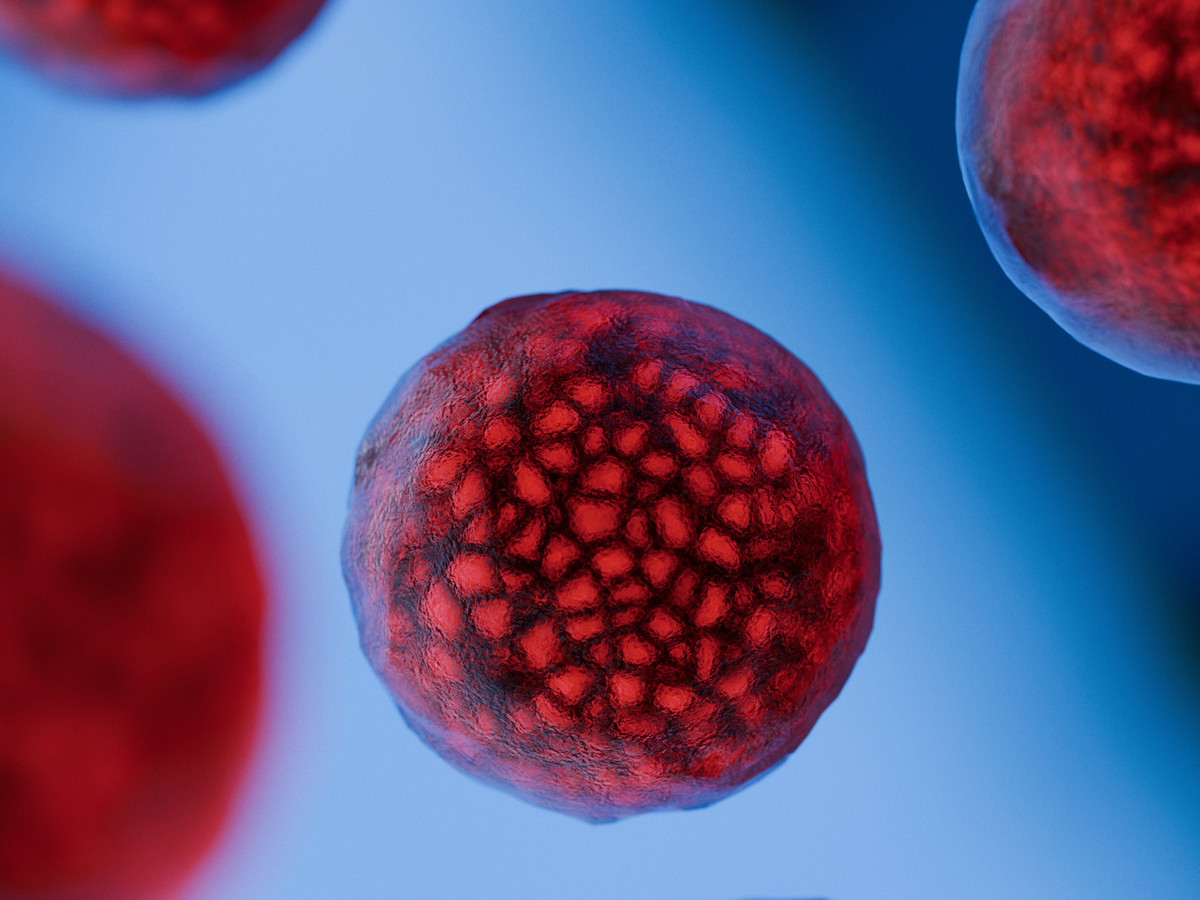
A vaso-occlusive crisis is what happens when red blood cells change shape, get stuck in small blood vessels, and stop blood from reaching the tissue on the other side.
That is the clinical definition. The reason it belongs in a conversation about oxygen is that oxygen is what triggers the shape change in the first place — or more precisely, the absence of it.
September is Sickle Cell Awareness Month. This post explains the mechanism for anyone who has been told what a crisis is without being told why it happens.
What Is Sickle Hemoglobin?
Hemoglobin is the protein in red blood cells that carries oxygen through the body and helps remove carbon dioxide [1]. Sickle cell disease is a group of inherited disorders caused by mutations in the hemoglobin genes, which produce a faulty version of the protein called hemoglobin S [2].
The change is genetic and specific. It traces to a variant in the HBB gene, which provides instructions for making beta-globin, one of hemoglobin's building blocks [3].
People with sickle cell disease inherit two of these variants, one from each parent [2]. Inheriting one copy alongside a normal copy gives a person sickle cell trait instead [2].
In the United States, sickle cell disease affects more than 100,000 people, and roughly 8 million worldwide [4]. It occurs in about 1 out of every 365 Black or African American births [5].
What Happens When Hemoglobin S Gives Up Its Oxygen?
This is the heart of it. Under low oxygen conditions, hemoglobin S transforms into stiff strands inside the red blood cell [2].
The molecules stick to one another and form long, rod-like structures [6]. Those structures change the cell itself — a red blood cell that was round and flexible [7] becomes hard and sticky, taking on the curved shape of the farm tool it is named after [8].
The timing is what makes this so unforgiving. Red blood cells release their oxygen in active tissue, which is exactly where they most need to stay flexible. The moment a cell delivers its cargo is the moment it is most likely to deform.
Why Does a Blockage Hurt So Much?
Because tissue without blood is tissue without oxygen. When sickled cells travel through small blood vessels, they get stuck and clog the blood flow [8], and they can also stick to vessel walls, slowing or blocking circulation further [2].
Downstream of that blockage, organs and tissues stop receiving what they need — and they cannot function without oxygen [1].
People describe the resulting pain as sharp, intense, stabbing, or throbbing, and it can strike almost anywhere in the body, in more than one place at once [9]. It commonly occurs in the hands, feet, chest, and back [10].
How long it lasts varies enormously. The CDC declines to give a typical range at all, noting a crisis can start suddenly, range from mild to severe, and last for any length of time [10]. Cleveland Clinic describes pain lasting a few hours or, in some cases, several days or weeks [11].
It is also worth separating two different experiences. Acute pain comes on suddenly and lasts a short time; chronic pain is daily and ongoing, lasting more than six months. People with sickle cell disease may live with either, or both [10].
What Sets Off a Pain Crisis?
Known triggers include dehydration, high altitudes, infections, pregnancy, smoking or vaping, strenuous physical activity, stress, sudden extreme temperature changes, and vitamin deficiencies [11]. The NHLBI separately identifies temperature extremes and stress as common triggers [12].
Most of these make sense once the mechanism is clear. Dehydration concentrates the blood. Altitude lowers available oxygen. Exertion increases how much oxygen tissue pulls from passing cells.
But triggers are not the whole story, and it matters to say so. A crisis can happen without warning [9]. Anyone living with sickle cell disease has likely had the experience of doing everything right and having one anyway.
Why Does Sickle Cell Also Cause Anemia?
Because sickled cells do not last. Healthy red blood cells live around 120 days; in sickle cell anemia they survive only 10 to 20 days [13].
They die early, producing a constant shortage of red blood cells [8]. With fewer cells available to deliver oxygen [13], the result is chronic anemia — usually mild to moderate, though severe anemia can be life-threatening [9].
So there are two distinct oxygen problems running at once. Crises are acute and local — a blocked vessel starving specific tissue. The anemia is chronic and systemic — less carrying capacity everywhere, all the time.
What Helps?
Hydroxyurea is an oral medication that reduces sickling of red blood cells and helps prevent serious symptoms including pain crises [14]. It remains the most widely used disease-modifying treatment [15].
Staying hydrated keeps red blood cells from sticking together [11], which is why drinking plenty of water is standard advice [16]. Over-the-counter pain medicine such as acetaminophen or ibuprofen can address mild to moderate pain, while severe crises often require hospital care with stronger medication and IV fluids [14][11].
Red blood cell transfusions supply normal cells that are more flexible than those carrying sickled hemoglobin [14]. Blood and bone marrow transplant is a potentially curative therapy for some people [14], and two gene therapies received FDA approval in December 2023 [4].
Anyone managing sickle cell disease should build a treatment plan with a hematologist or healthcare provider who knows their history. Nothing here substitutes for that.
If you live with sickle cell disease, none of this is news — you have understood the mechanism in your body long before reading it described.
This post is for everyone else. For the coworker who does not understand why someone was fine on Tuesday and hospitalized on Thursday, or the friend who thinks a pain crisis is something you can push through.
Awareness months work when they change what people assume. The thing to take from this one is that a crisis is not a pain threshold being tested. It is a blood supply being cut off — and the people describing it are the ones who know best what it costs.
References
[1] Cleveland Clinic. "Sickle Cell Anemia." https://my.clevelandclinic.org/health/diseases/4579-sickle-cell-anemia
[2] National Heart, Lung, and Blood Institute. "Sickle Cell Disease — Causes and Risk Factors." https://www.nhlbi.nih.gov/health/sickle-cell-disease/causes
[3] MedlinePlus Genetics, National Library of Medicine. "Sickle Cell Disease." https://medlineplus.gov/genetics/condition/sickle-cell-disease/
[4] National Heart, Lung, and Blood Institute. "Sickle Cell Disease." https://www.nhlbi.nih.gov/health/sickle-cell-disease
[5] Centers for Disease Control and Prevention. "Data and Statistics on Sickle Cell Disease." https://www.cdc.gov/sickle-cell/data/index.html
[6] National Human Genome Research Institute. "About Sickle Cell Disease." https://www.genome.gov/Genetic-Disorders/Sickle-Cell-Disease
[7] St. Jude Children's Research Hospital. "Sickle Cell Disease." https://www.stjude.org/disease/sickle-cell-disease.html
[8] Centers for Disease Control and Prevention. "About Sickle Cell Disease." https://www.cdc.gov/sickle-cell/about/index.html
[9] National Heart, Lung, and Blood Institute. "Sickle Cell Disease — Health Effects." https://www.nhlbi.nih.gov/health/sickle-cell-disease/health-effects
[10] Centers for Disease Control and Prevention. "Pain and Sickle Cell Disease." https://www.cdc.gov/sickle-cell/complications/pain.html
[11] Cleveland Clinic. "Sickle Cell Crisis."
https://my.clevelandclinic.org/health/diseases/sickle-cell-crisis
[12] National Heart, Lung, and Blood Institute. "Sickle Cell Disease — Living With." https://www.nhlbi.nih.gov/health/sickle-cell-disease/living-with
[13] St. Jude Children's Research Hospital. "Sickle Cell Anemia." https://www.stjude.org/care-treatment/treatment/blood-disorders/sickle-cell/sickle-cell-anemia.html
[14] National Heart, Lung, and Blood Institute. "Sickle Cell Disease — Treatment." https://www.nhlbi.nih.gov/health/sickle-cell-disease/treatment
[15] American Society of Hematology. "Sickle Cell Disease." https://www.hematology.org/education/patients/anemia/sickle-cell-disease
[16] Centers for Disease Control and Prevention. "Preventing and Treating Complications of Sickle Cell Disease." https://www.cdc.gov/sickle-cell/about/prevention-and-treatment.html



Leave a comment
This site is protected by hCaptcha and the hCaptcha Privacy Policy and Terms of Service apply.